
Newsletter Subscribe
Enter your email address below and subscribe to our newsletter

 ByJohn A
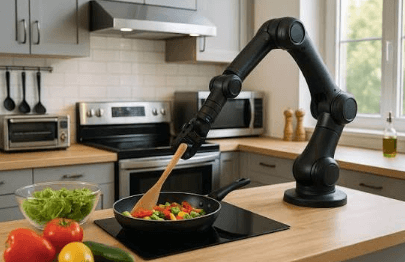
AI-powered kitchen devices currently sense, analyze, and control in real time, forming an adaptive ecosystem that blends user input, analytics, and energy goals. They translate sensor streams and history into personalized guidance, balancing nutrition, cost, and convenience. The effectiveness rests on interoperable modules, robust data governance, and privacy-preserving design that preserves user autonomy. Yet the path from promise to practice raises questions about safety, trust, and accountability that demand careful scrutiny.
AI-driven kitchen devices today integrate sensing, processing, and connectivity to automate common culinary tasks while supporting user oversight. They monitor inputs, adjust conditions, and deliver real-time feedback, forming an adaptive ecosystem. This mechanism reveals AI trends, emphasizes kitchen analytics, and promotes energy optimization. User profiling informs preferences, while systematic testing validates reliability, enabling freedom through transparent, accountable automation.
AI personalizes cooking and shopping by translating sensor data, user history, and environmental context into tailored recommendations and adaptive workflows.
The approach treats preferences as dynamic constraints, testing interventions in real time.
AI driven personalization emerges from cross-domain signals, balancing nutrition, cost, and convenience.
Shopping recommendations refine ingredient procurement, while cooking guidance adapts to user feedback, system latency, and context.
Choosing the right ensemble of smart kitchen appliances and their supporting systems requires a structured evaluation of capability, interoperability, and lifecycle costs. This analysis remains rigorous yet exploratory, emphasizing modularity and open standards. A practical setup prioritizes a cohesive smart supply and robust data governance, enabling traceable decisions, scalable integration, and resilient operation without sacrificing user autonomy or experimentation within daily routines.
The shift from configuring a modular, open-standard kitchen to evaluating safety, privacy, and energy implications centers on how automated systems collect, store, and process data while governing power use and physical risk.
This analysis isolates privacy implications, evaluates risk management, and tests resilience, while pursuing energy optimization through analytics, consent, and transparent data practices, enabling autonomous operation without compromising user autonomy or safety.
Taste profiling emerges as data accumulates from user interactions, while learning algorithms iteratively refine preferences; patterns in choices, timing, and feedback inform adjustments, enabling adaptive recommendations within an experimental, systematic framework for freedom-seeking users.
Yes, AI can anticipate consumption and trigger proactive restocking. It employs predictive grocery forecasting, analyzing patterns and seasonality, while upholding privacy first data handling. The approach remains analytical, experimental, and systematic, aligning with audiences valuing autonomy and informed choice.
AI kitchen devices do not require constant cloud connectivity; they can operate offline with local data processing. However, periodic cloud access enhances updates. Data ownership considerations remain essential for users, especially regarding AI connectivity and the handling of personal data.
See also: digitalhub4geeks
Privacy laws protect ai kitchen data through obligations on data minimization, explicit user consent, and transparency; they constrain continuous learning and require robust privacy protections, audits, and breach notification to uphold data handling standards, balancing freedom with accountability.
Costs vary with hardware, software licenses, and data handling. ROI metrics measure energy savings, waste reduction, and process efficiency. The analysis remains experimental and systematic, acknowledging uncertainties, while presenting cost considerations that resonate with an audience pursuing freedom and informed choice.
AI-enabled kitchens today synthesize sensor data, user history, and connected ecosystems to optimize cooking accuracy, energy use, and shopping decisions. This systematic integration enables real-time adjustments, personalized guidance, and transparent governance. Experimentation with modular, interoperable devices supports accountability and continuous improvement, while privacy-preserving design protects autonomy. As the adage goes, “the proof is in the pudding”—and in this context, robust data practices, clear interfaces, and measurable outcomes are the key ingredients for trustworthy innovation in smart kitchens.


[…] See also: AI in Smart Kitchen Appliances […]